Hi! I’m Mai-sensei, a native Japanese tutor.
Have you ever used a basic Japanese word you learned early on, only to realize later it sounded cold, dismissive, or even rude?
This happens because Japanese meaning is not only about vocabulary. It’s also about stance, tone, and what you’re implying socially. Below are everyday words that are totally normal in many contexts, but can become “dangerous” when used as short replies.
- たくさん (takusan): from “a lot” to “I’ve had enough”
- 違います (chigaimasu): “different” vs “too blunt”
- 知りません (shirimasen): “I don’t know” vs “not my problem”
- もういい (mou ii): “That’s enough” can be dangerous
- さあ (saa): “I don’t know” that can sound dismissive
- ちょっと (chotto): “a little” vs “soft no” vs “Hey!!”
- Quick takeaway: how to avoid “danger replies”
- Summary
たくさん (takusan): from “a lot” to “I’ve had enough”
Safe uses (quantity only)
・人がたくさんいます。
Hito ga takusan imasu.
There are a lot of people.
・プレゼントをたくさんもらいました。
Purezento o takusan moraimashita.
I received a lot of presents.
Risky uses (rejection / irritation)
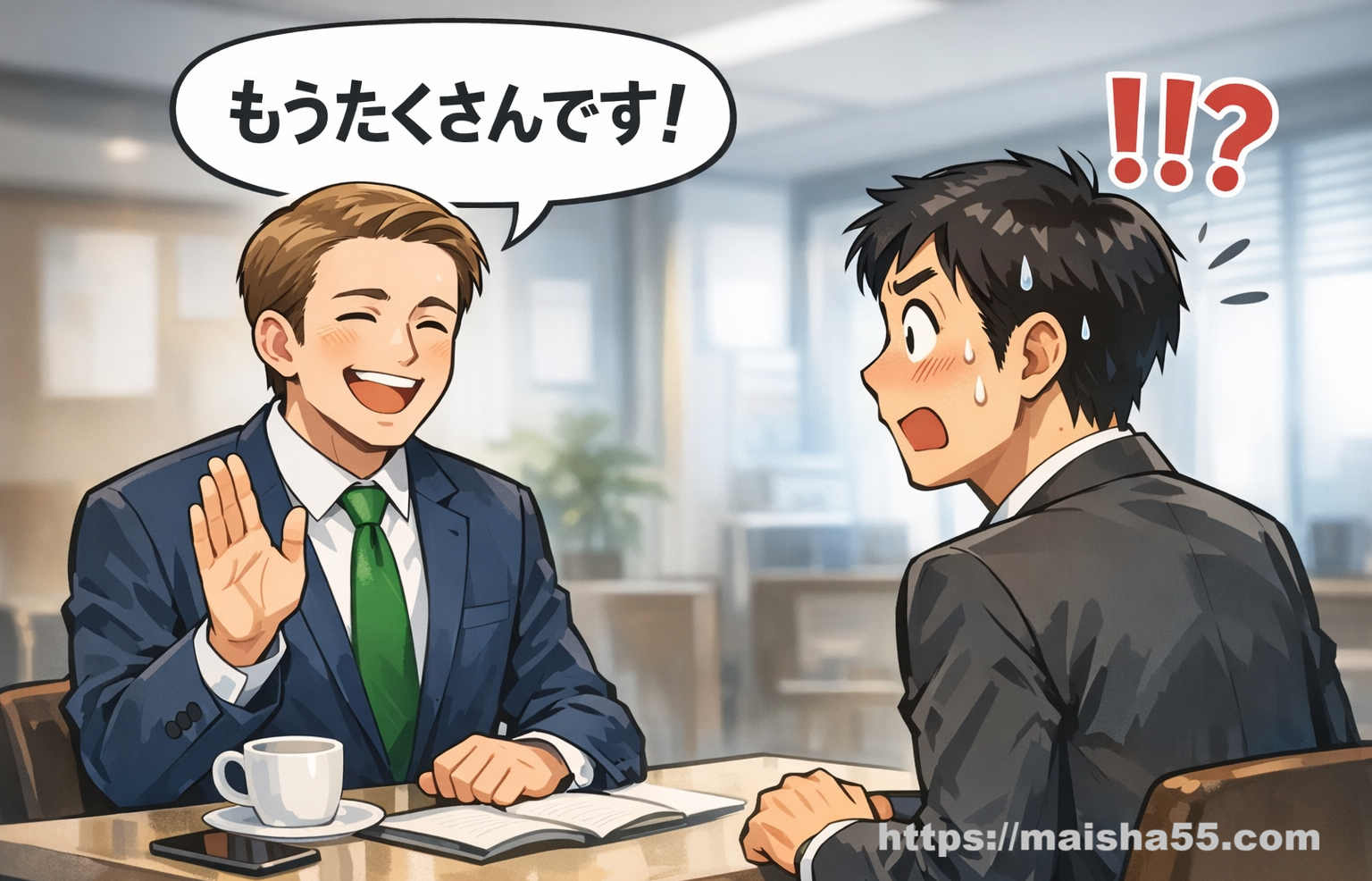
・もうたくさんです。
Mou takusan desu.
I’ve had enough. / No more, thanks. (sounds fed up)
・そのようなイベントはもうたくさんです。
Sono you na ibento wa mou takusan desu.
I’ve had enough of those kinds of events. (sounds dismissive, slightly angry)
Why it’s risky
たくさん normally means “a lot,” but in fixed patterns like もうたくさんです it shifts from quantity to a strong emotional message: “I’m done with this.”
違います (chigaimasu): “different” vs “too blunt”
Safe use (systems / facts)
・パスワードが違います。
Pasuwaado ga chigaimasu.
The password is incorrect.
Risky use (direct correction)
・違います!
Chigaimasu!
No, you’re wrong! (very blunt)
・違う違う!
Chigau chigau!
No, no! (can sound harsh)
Softer alternatives
・少し違うようです。
Sukoshi chigau you desu.
It seems a bit different.
・私の理解では、少し違います。
Watashi no rikai de wa, sukoshi chigaimasu.
In my understanding, it’s slightly different.
知りません (shirimasen): “I don’t know” vs “not my problem”
Safe use (true lack of information)
・私は暗証番号を知りません。
Watashi wa anshou bangou o shirimasen.
I don’t know the PIN.
Risky use (cold dismissal)
・知りません。
Shirimasen.
I don’t know. (can sound like “Not my problem.”)
Important note
Learners sometimes use 知りません as a substitute for 分かりません (wakarimasen).
But 分かりません often sounds softer because it implies you tried to understand but couldn’t.
Recommended:
・すみません、ちょっと分かりません。
Sumimasen, chotto wakarimasen.
Sorry, I’m not sure / I don’t quite know.
もういい (mou ii): “That’s enough” can be dangerous
Why it’s risky
If you use もういい like English “That’s enough,” it can sound angry or fed up, similar to もうたくさん.
It can imply:
- “Stop. I’m annoyed.”
- “I’m done with this.”
- “Why are you still doing that?”
If you mean “You can stop now” (neutral), be careful with tone
・もう大丈夫ですよ。
Mou daijoubu desu yo.
You can stop now, it’s okay.
・ここまでで大丈夫です。
Koko made de daijoubu desu.
This is enough for now.
さあ (saa): “I don’t know” that can sound dismissive
This is a classic trap for advanced learners because it’s short, common, and looks like an easy equivalent of “I don’t know.”
Risky use (sounds cold when someone is asking sincerely)
A: 天気悪いですけど、イベント中止になりますかね?
Tenki warui desu kedo, ibento chuushi ni narimasu ka ne?
The weather is bad… do you think the event will be cancelled?
B: さあ。
Saa.
…Who knows. (can sound like “Don’t ask me.”)
Why it sounds cold
In Japanese, when someone asks for your opinion or reassurance, it’s common to add a cushion that shows empathy or shared thinking.
Much better options
・さあ、どうだろうね。
Saa, dou darou ne.
Hmm… I’m not sure.
・うーん、微妙だね。
Uun, bimyuu da ne.
Hmm… hard to say.
・ちょっと分からないね。
Chotto wakaranai ne.
I’m not sure.
When “さあね” can work
When talking about a third person with a detached or slightly ironic tone:
A: 〇〇さん、会社のお金使い込みしてクビだって。これからどうするんだろうね?
Maru-maru san, kaisha no okane tsukaikomi shite kubi datte. Kore kara dou suru n darou ne?
Apparently Mr./Ms. X got fired for embezzling company money. What are they going to do now?
B: さあね。
Saa ne.
Who knows. (can carry “not my problem” or mild irony, which fits this context)
ちょっと (chotto): “a little” vs “soft no” vs “Hey!!”
Safe use (small amount / request)
・ちょっと待ってください。
Chotto matte kudasai.
Please wait a moment.
Risky use 1: indirect refusal
・それはちょっと…
Sore wa chotto…
That’s a bit… (often means “No,” indirectly)
Risky use 2: sharp protest
・ちょっと!!
Chotto!!
Hey!! / What are you doing?! (strong, emotional)
Example nuance:
・ちょっと、何してんのよ!
Chotto, nani shiten no yo!
Hey, what are you doing?!
Perfect addition. Here’s a section you can insert into the “ちょっと” part of your article:
“Wait, Isn’t ‘Chotto’ a Softener?!”
Yes — and no.
ちょっと (chotto) is often described as a magical softening word in Japanese. And that’s true.
It can:
- make requests gentler
- make refusals indirect
- reduce the emotional weight of a statement
For example:
・ちょっと待ってください。
Chotto matte kudasai.
Please wait a moment. (soft, polite)
・それはちょっと…
Sore wa chotto…
That’s a bit… (soft indirect refusal)
In these cases, ちょっと functions as a buffer. It reduces directness and creates social cushioning.
But here’s the important part:
“Chotto” is not inherently soft.
It’s not a built-in politeness marker.
It’s a tone amplifier.
If the tone is gentle, it softens.
If the tone is sharp, it sharpens.
Consider these:
・ちょっと待ってよ!!
Chotto matte yo!!
Hey, wait a second!!
・ちょっとおかしいんじゃないの?
Chotto okashii n ja nai no?
Isn’t that a bit strange? (can sound accusatory)
Here, ちょっと does not soften.
Instead, it adds emotional force — irritation, disbelief, confrontation.
Why does this happen?
Because in Japanese, ちょっと literally means “a little.”
When used emotionally, it can imply:
- “Even a little bit of common sense would tell you…”
- “This is slightly unacceptable…”
- “Just wait a second!” (but emotionally loaded)
In heated contexts, it becomes a signal of impatience.
So what should learners remember?
- ちょっと is a contextual softener, not a universal one.
- It works best when paired with polite structure and calm tone.
- In emotional speech, it often signals irritation.
- Written Japanese can hide tone, making it risky in text messages.
Practical advice
If you’re unsure, combine ちょっと with:
- すみません (sumimasen)
- 申し訳ないですが (moushiwake nai desu ga)
- もしよければ (moshi yokereba)
These clearly frame it as softening.
Without those, “ちょっと” can easily drift into “Hey!” territory.
Quick takeaway: how to avoid “danger replies”
If your reply is short and blunt, Japanese listeners often read it as attitude.
To sound natural and kind, add one small cushion:
- うーん… (uun…)
- ちょっと… (chotto…)
- すみません… (sumimasen…)
- どうだろうね… (dou darou ne…)
These tiny phrases change the emotional temperature of your Japanese.
Summary
Words like たくさん, ちょっと, 違います, 知りません, もういい, and さあ are all common, basic vocabulary. The danger comes from using them as short replies without the social “cushion” Japanese often expects. Once you learn the hidden stance behind them, you can sound both natural and polite without becoming overly formal.