Wakaru vs Shiru Difference: Why “Wakaru!” Feels Warm but “Shiru” Often Doesn’t

wakaru shiru difference in Japanese

Hi! I’m Mai-sensei, a native Japanese tutor. I offer online Japanese lessons, and you’ll find more details at the end of this article. If you’re learning Japanese, you’ve probably used both 分かる (wakaru) and 知る (shiru) since the very beginning. They’re usually translated as “understand” and “know”, so many learners assume the difference is simple. But in real Japanese, the wakaru shiru difference is much deeper — and much more emotional — than most textbooks explain. This article focuses on how Japanese speakers actually use these words in conversation, why learners often feel confused, and how choosing the wrong one can subtly change your attitude, tone, or even sound rude. … Read more
What Is だ / です (da / desu)? Why It’s Not a Verb and Why It Matters for Natural Japanese

Hi! I’m Mai-sensei, a native Japanese tutor. I offer online Japanese lessons, and you’ll find more details at the end of this article. Many Japanese learners know the grammar rules, but still feel unsure when speaking naturally. This often happens because grammar is memorized as “forms,” not as a system used in real speech. In this article, I’ll explain how だ (da), です (desu), の (no), and な (na) actually work together, so you can understand Japanese as it’s used in everyday conversation. This is not a textbook explanation. It’s a guide to how native speakers intuitively use grammar when they talk.   What are だ (da) and です (desu) … Read more

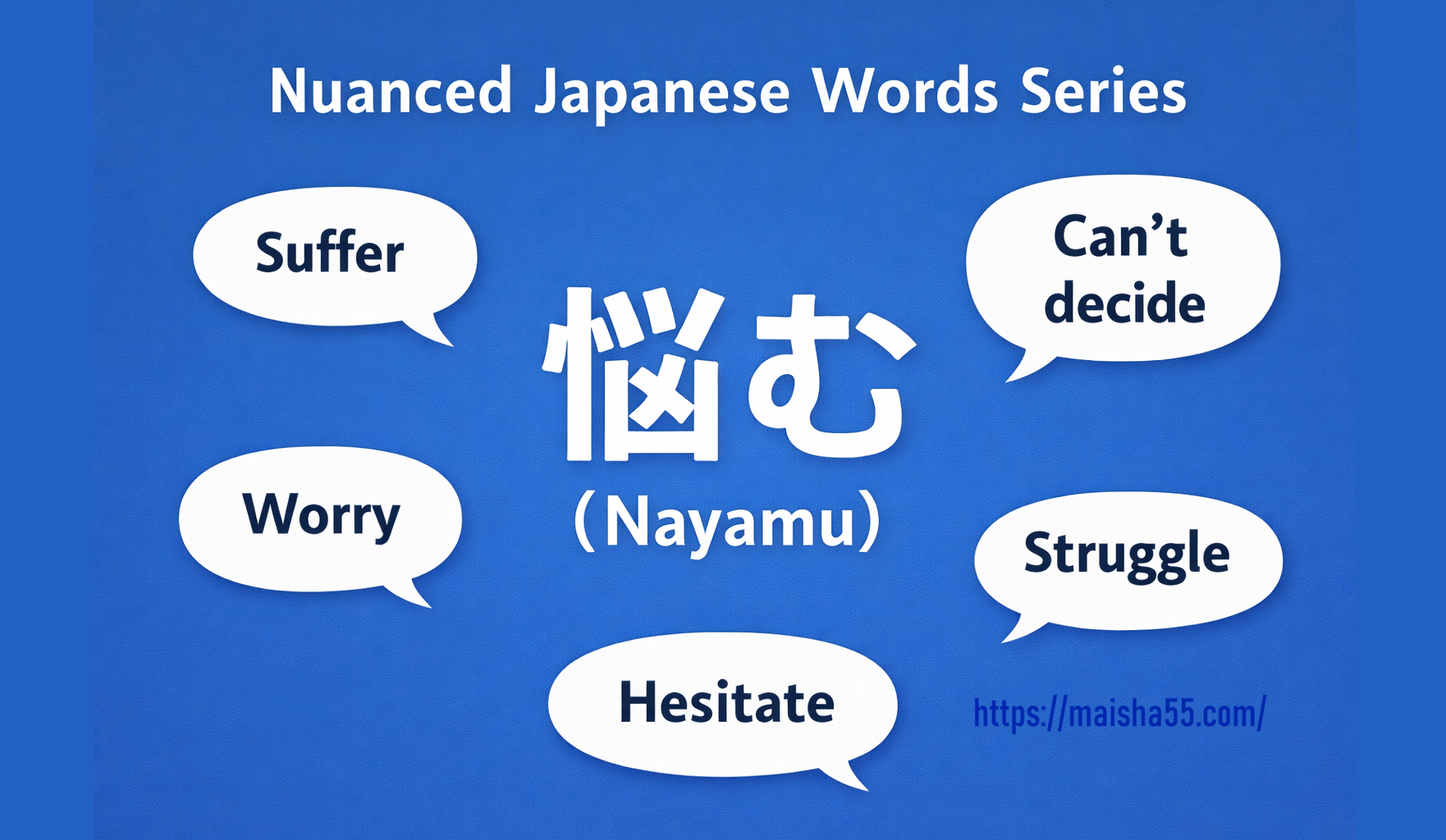
The Japanese Verb “悩む” (Nayamu): Meaning, Usage, and Why It’s Hard to Translate

Hi! I’m Mai-sensei, a native Japanese tutor. I’m currently accepting online Japanese lessons. Details are written at the end of this article. What does Nayamu mean? If you have studied Japanese for a while, you have probably encountered the verb 悩む (nayamu) and felt that something about it is… vague. It often gets translated as “to worry” or “to be troubled,” but those English words don’t fully capture how Japanese people actually use 悩む (nayamu) in daily life. In this article, I’ll explain: Why 悩む (nayamu) covers an unusually wide emotional range How it can describe both heavy suffering and light hesitation Why its grammar confuses learners, especially around objects … Read more

Why Japanese Says ‘Taxi ga iru’ (And Why ‘Aru’ Feels Wrong)

Hi! I’m Mai-sensei, a native Japanese tutor. Textbook Japanese is useful, but have you ever heard a native speaker say something and thought, “Wait… that’s not how I learned it”? In real life, native Japanese often bends the “rules” in ways textbooks don’t fully explain. That’s exactly what this post is about. Welcome to my “Nobody Told Me This Usage!” series. Today’s topic: ある (aru) vs いる (iru). This is something that actually happened to me while walking in Japan with a foreign friend. It was before I started formally studying Japanese language education. I said: “Ah, there are so many taxis in front of the station.” In Japanese, what … Read more

Choosing an Online Japanese Tutor: Why Extremely Cheap Lessons Can Be a Red Flag

Hi! I’m Mai-sensei, a native Japanese tutor. When choosing an online Japanese tutor, price matters more than many learners realize. While everyone wants good value, lessons that are too cheap often come with hidden downsides. This article explains what to watch out for and how to choose a tutor who will truly support your learning. Note:This is my personal opinion, but when I refer to a “cheap tutor” in this article, I generally mean tutors charging around USD 15 or less per lesson. That said, tutors who have just started teaching online often need to set lower prices in order to build experience and reviews. From that perspective, they can … Read more

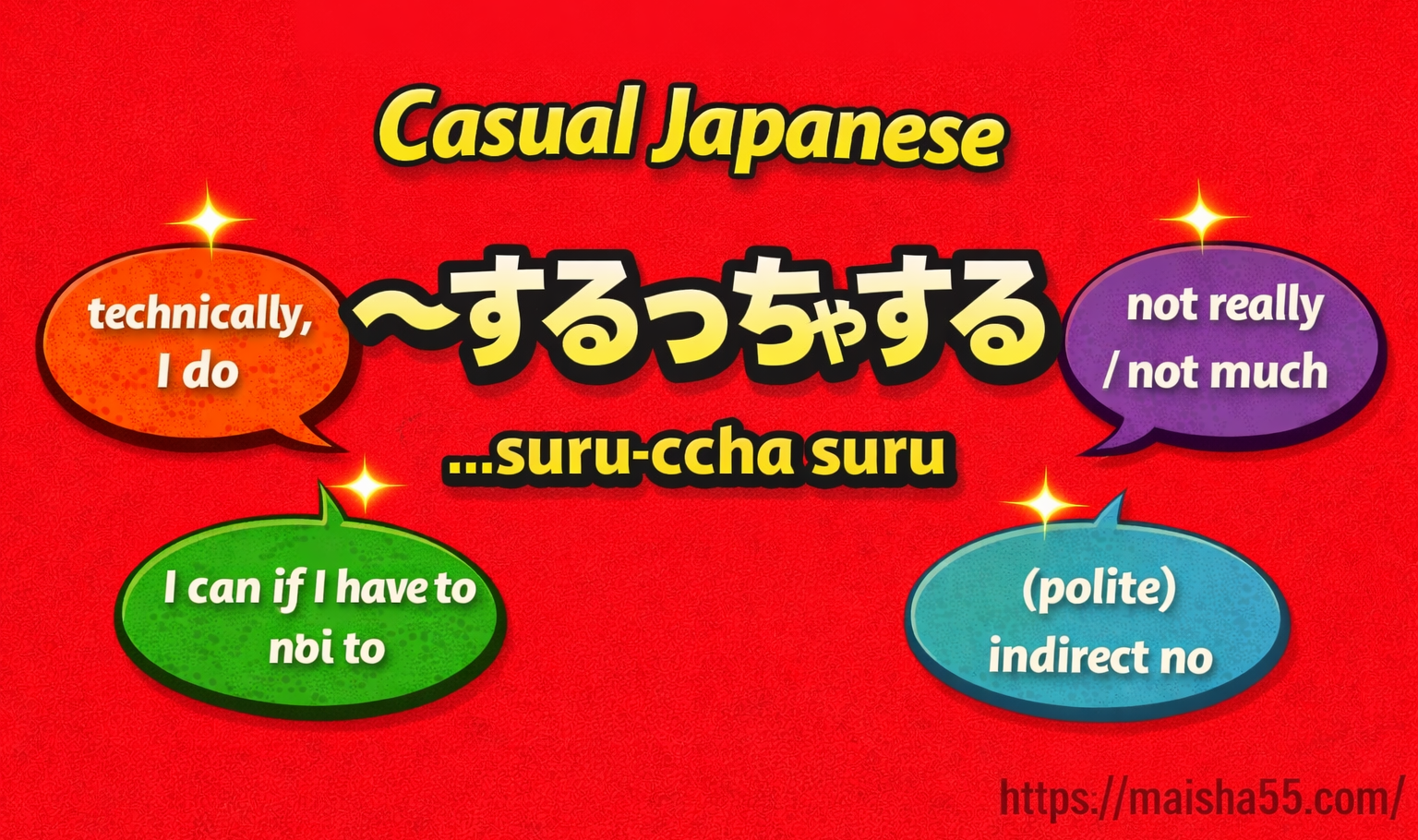
Japanese Casual Expression: 〜っちゃ〜する (…ccha …suru)

Hi! I’m Mai-sensei, a native Japanese tutor. I’m currently accepting online Japanese lessons. Details are written at the end of this article. What does 〜っちゃ〜する mean? 〜っちゃ〜する is a casual, spoken pattern that means: “I do (if you put it that way)… but…” “I can (technically)… but…” “Yes, but only to a limited degree” / “Not really” / sometimes “(Soft) no” It often sounds like you’re agreeing a little, then adding a but to adjust expectations. Where does 〜っちゃ come from? Many learners notice this: 〜っちゃ is very close in meaning to 〜と言えば (to ieba) and sometimes 〜には〜 (ni wa). 飲むっちゃ飲むけど ≈ 飲むと言えば飲むけど (nomu to ieba nomu kedo) 飲めるっちゃ飲めるけど ≈ … Read more

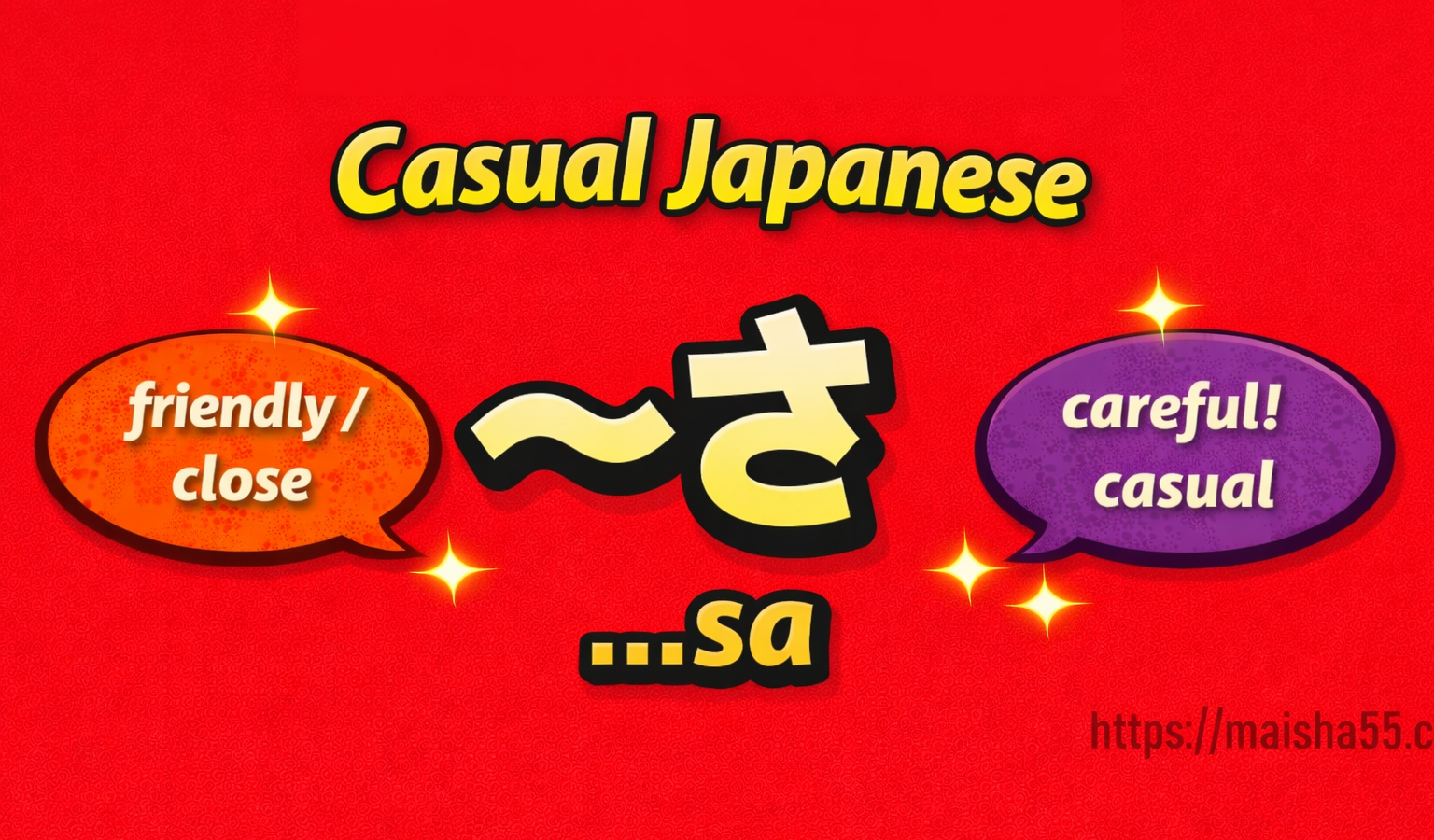
Japanese Casual Expression: 〜さ (…sa) – Use with caution! (Friendly, but risky)

Hi! I’m Mai-sensei, a native Japanese tutor. In casual Japanese, 〜さ (…sa) is a super common speech habit. It can sound friendly, relaxed, and natural among close friends. However, 〜さ (…sa) is also one of those expressions that advanced learners accidentally overuse, especially as a filler like あのさ〜 (ano sa) or えっとさ〜 (etto sa). When used with someone you’re not close to, it may sound too familiar or even rude. This article focuses on conversational 〜さ (…sa) used in casual speech.(It does NOT cover storytelling とさ (…to sa) such as 「むかしむかし…しあわせにくらしましたとさ」, which is a different usage.) 1) What is 〜さ (…sa)? Learners often search for this expression as: “Japanese ending … Read more

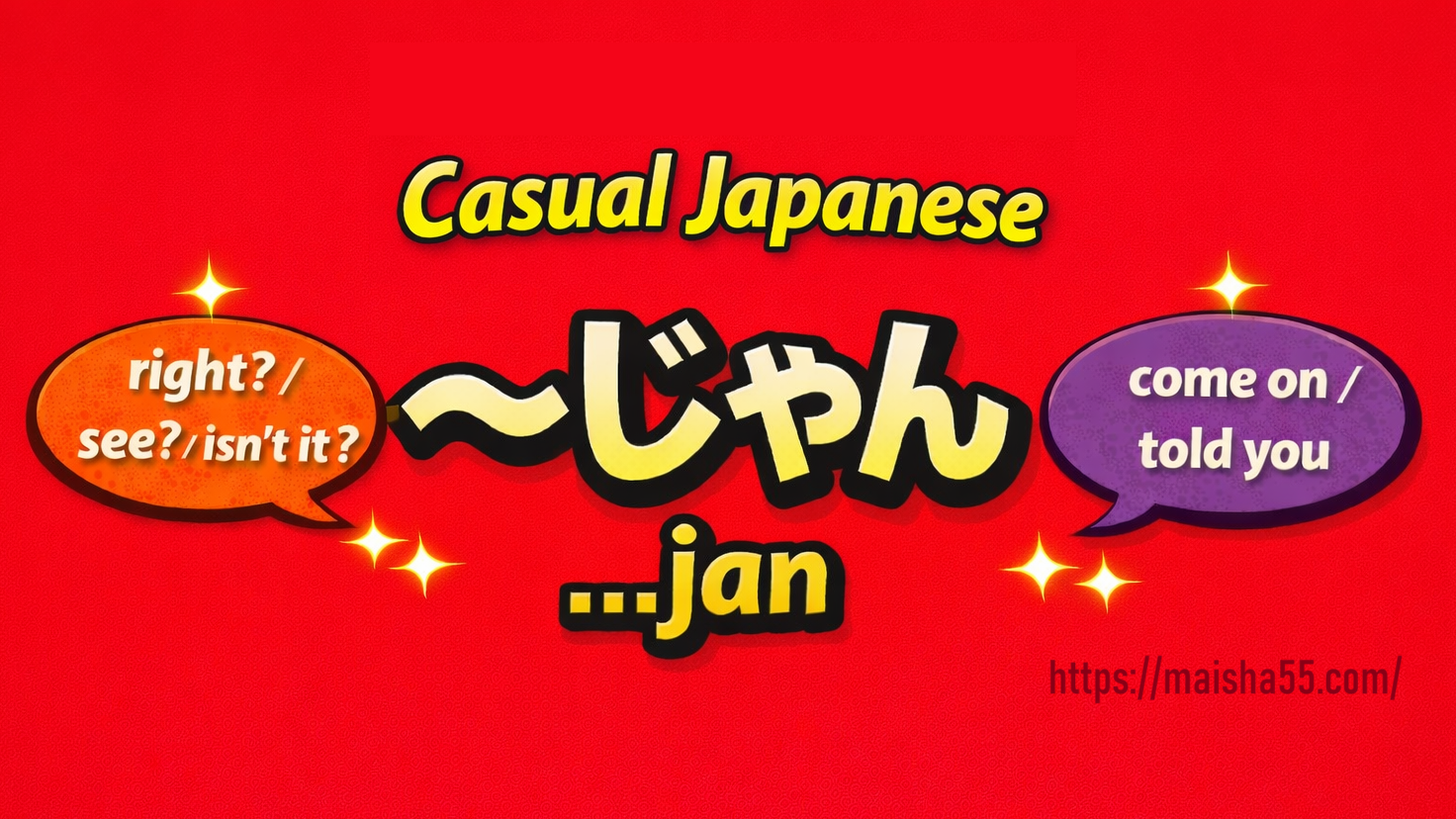
Japanese Casual Expression: 〜じゃん (…jan)

Hi! I’m Mai-sensei, a native Japanese tutor. 〜じゃん (…jan) is one of the most common spoken endings in casual Japanese. You’ll hear it everywhere: friends chatting, couples bickering, coworkers whispering, people reacting to videos, and basically any moment where someone wants to say “See?”, “Told you”, “Right?”, or “Come on”. At its core, 〜じゃん (…jan) is a casual way to: point out something obvious confirm shared knowledge push for agreement lightly tease or complain emphasize “that’s exactly what I mean” It can sound friendly, playful, or slightly confrontational depending on tone. 1) What 〜じゃん (…jan) means (Core Grammar Explanation) 〜じゃん (…jan) is a colloquial contraction of 〜じゃない (…ja nai). In … Read more

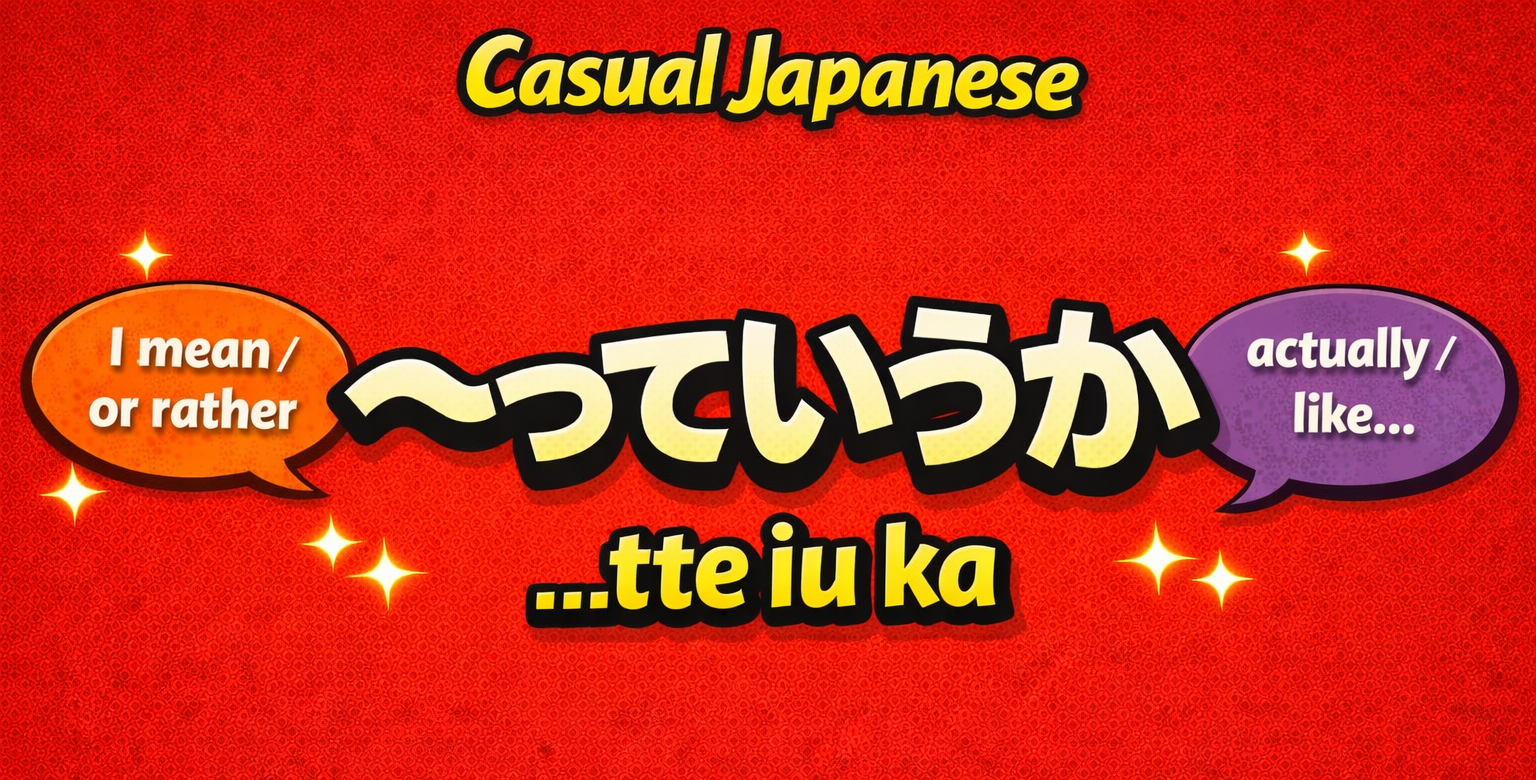
Japanese Casual Expression: 「っていうか (tte iu ka)」 (The Native Fix-It Phrase: “I mean / or rather / actually / like…”)

Hi! I’m Mai-sensei, a native Japanese tutor. If you want to sound more natural in spoken Japanese, 「っていうか (tte iu ka)」 is absolutely essential. Japanese people use it constantly in everyday conversation because it’s a convenient tool for: correcting yourself mid-sentence rephrasing what you said softening an opinion adding a casual “commentary” changing direction in a conversation Depending on context, 「っていうか (tte iu ka)」 can feel like: “I mean…” “or rather…” “actually…” “like…” “more like…” “to be honest…” 1) What 「っていうか (tte iu ka)」 means (Core Grammar Explanation) 「っていうか (tte iu ka)」 comes from the phrase: 「って言う (tte iu)」 = “to say / called” 「っていうか (tte iu ka)」 = “if … Read more